AI Automation
Work that
runs itself.
Every company has a few processes that eat hours a week and produce nothing anyone's proud of — moving data between systems, sorting inbound, chasing the same approvals. We find those, automate the ones worth automating, and leave the rest alone.
Most automation projects fail the same way: someone automates the process everyone can describe, instead of the one that actually hurts. We start by watching the work — the exports, the copy-paste, the person who's quietly become the API between two systems. That's where the hours are.
We automate the boring, not the important
Judgment calls stay with people. The mechanical steps around them — fetching, formatting, routing, filing — are what we hand to software. Holding that line is why the automation gets trusted instead of switched off.
It fails loudly
Every automation we ship tells you when it didn't work. Silent failure is worse than no automation, because you stop checking and find out a month later. Ours leave a trail you can audit.
You own it when we leave
Plain code in your repo, running on your infrastructure. No black box, no per-seat licence, and no calling us to change a rule.
The handoffs between systems
The spreadsheet that becomes an email that becomes a ticket. We collapse those chains into one step that runs on its own.
Inbound triage
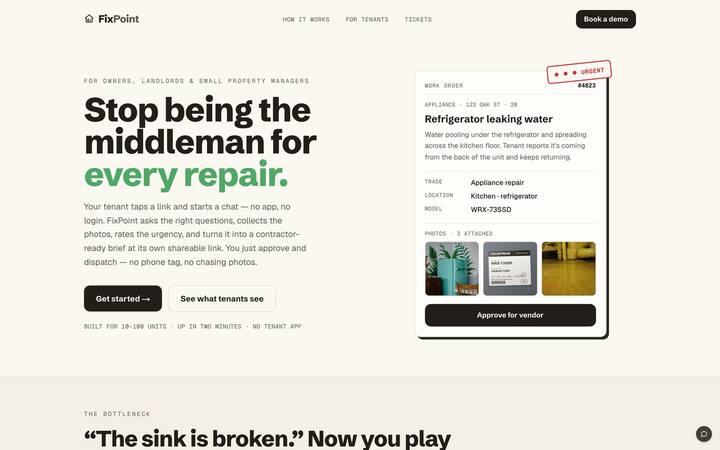
Support requests, applications, leads, repair photos. Sorted, summarized, and routed to the right person with the context already attached.
Documents in, data out
Invoices, contracts, PDFs, scans. Pulled apart into structured fields you can actually query, with the source page one click away.
The report nobody wants to write
The weekly roll-up someone rebuilds by hand every Monday morning. Generated, checked, and sitting in the inbox before they log on.
Decisions with a paper trail
Workflows that clear the obvious cases, escalate the unclear ones, and log why they did either. Rules where rules work, models where they don't.
Most engagements start with one of these and grow. The second is always cheaper than the first — the plumbing's already there.
We watch the work
A week or two looking at how a process actually runs, not how the doc says it does. What we find usually isn't on the org chart.
One process, end to end
We pick the one with the best hours-saved-to-risk ratio and ship it properly. A single working automation beats a roadmap of them.
Then the next one
We keep going while it's still worth it — and tell you when it stops being worth it. Not every process should be automated.
Automations in production
Running on your infrastructure, doing the work. Not a prototype waiting on someone to make it real.
The code, in your repo
Readable and commented, in a stack any competent engineer can pick up. No framework we invented.
Alerts that reach a human
When something breaks — and it will — you hear about it from the system, not from the customer who noticed first.
An honest map
What we automated, what we left alone, and why. The “left alone” list tends to matter more than people expect.